Welcome to zctower
Language:
 ∷
∷

∷
 ∷
∷


Plastic security seals are widely used across logistics, transportation, retail, banking, and many other industries that require reliable tamper-evident protection. One of the most common questions buyers ask is whether plastic seals can be reused or if they are strictly single-use devices. Understanding this difference is essential for choosing the right seal for your application, managing security risks, and controlling operational cost.
Most Plastic Security Seals—such as pull-tight seals, fixed-length seals, and padlock-style seals—are single-use. Once locked, they must be broken or cut to be removed. This one-way mechanism provides clear evidence of tampering.
The purpose of a seal is not to resist force like a lock; instead, it offers a simple and traceable method of verifying whether goods, doors, or containers have been opened.
Because they must be destroyed to be removed, they eliminate the risk of someone secretly opening and re-closing the seal without detection.
There are several reasons plastic seals are not suitable for reuse:
1.Tamper-evident locking mechanismThe internal locking teeth deform permanently when engaged. Re-locking it again would be impossible or visibly damaged.
2.Material fatigueMost seals are made from polypropylene or nylon. Once stressed or cut, the material loses structural integrity, risking accidental breakage.
3.Unique serial numbersEach plastic seal has a unique number for tracking. Reusing a seal would break the chain of custody and compromise security auditing.
4.Regulatory complianceMany industries—such as aviation, cash handling, pharmaceuticals, and food logistics—require single-use seals to ensure complete traceability.
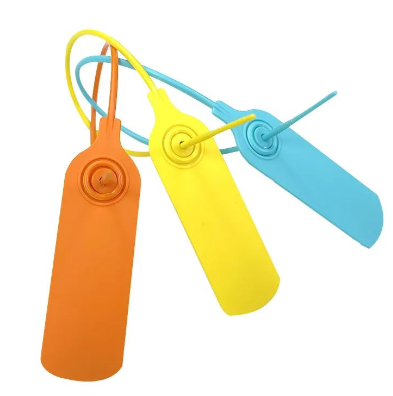
A small category of seals can be reused, but these are not traditional plastic security seals. Examples include:
Reusable cable ties (not security-rated)
Plastic locks with key mechanisms
Plastic reusable padlocks (mostly for identification, not sealing)
These products do not provide the same tamper-evident protection as single-use security seals. They are used for organization, labeling, or access control, not for securing high-risk assets.
Choose single-use plastic seals when you need:
Evidence of unauthorized access
Unique barcode or serial-number tracking
Inexpensive but reliable sealing
Compliance with logistics or customs standards
Quick sealing during transport
Single-use plastic seals are ideal for:
Containers and trucks
Postal bags and courier parcels
Cash and banking operations
Utility meters
Airport trolleys and catering carts
Chemical drums
Reusable plastic locking devices can be used when:
Tamper evidence is not required
You only need visual identification
Items are accessed frequently
Budget control is important
However, businesses transporting valuable goods or sensitive materials should always choose single-use tamper-evident seals for maximum security and compliance.
Plastic security seals are designed to be single-use for strong tamper evidence, material integrity, and traceability. Reusable plastic devices do exist, but they are not true security seals and should only be used for low-risk applications. If your priority is protection, auditing, and preventing unauthorized access, single-use plastic seals remain the most reliable and cost-effective solution for modern logistics.
Contact: Cherry Deng
Phone: +86 15305911267
Tel: +86 0591-83656592
Email: cherry@zcsecurityseals.com
Add: NO.136 FuGuang Road, distrito JinAn FuZhou, FuJian