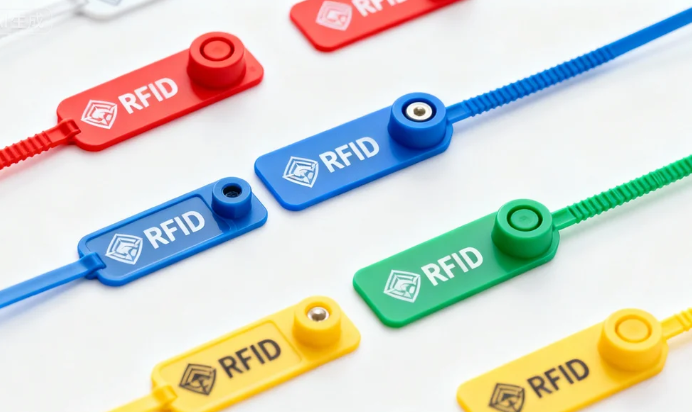
An RFID secure seal is a tamper-evident locking device that combines the advantages of traditional physical seals with modern RFID technology.
Structure and Components
Physical Shell: Usually made of plastic or metal to ensure durability and resistance to the elements. For example, some are made of polypropylene which can withstand harsh environments.
RFID Chip: Embedded inside the body, it's the core component for storing and transmitting data. Each chip has a unique ID code, like an electronic fingerprint, which cannot be replicated.
Working Principle
Sealing and Data Recording: When the seal is locked onto an object such as a container door, truck latch, or equipment panel, the system records important data like the seal ID, container or asset number, date and location of sealing, and operator or driver ID.
Data Storage and Transmission: The RFID chip has a memory cell that stores a unique electronic code. When an RFID reader emits radio waves, the seal's antenna captures the signal and sends back its ID and status data within milliseconds.
Tamper Detection: Advanced RFID seals are equipped with an internal conductive loop or sensor wire. If the seal is cut or forced open, the loop breaks, changing the chip's internal state to "tampered". The next time it is scanned, the reader will immediately issue a tamper alert with a timestamp.
Types
RFID Bolt Seal: Usually operates in the UHF frequency band. It is characterized by high tensile strength and is often used to secure shipping containers and rail cargo, complying with ISO 17712 standards.
RFID Cable Seal: Available in HF/UHF frequency bands. It is flexible and some can be reused, suitable for sealing logistics cages and meter boxes.
NFC Seal Tag: Operates in the HF/NFC frequency range. It can be verified by smartphones and is often used in retail packaging and asset tracking.
Sensor Seal: Integrates additional sensors, operating in the UHF band with temperature, humidity, or other sensing functions. It is mainly used in cold chain logistics and the pharmaceutical industry.
Advantages
Enhanced Security: It combines physical protection with digital identification, making it difficult to forge or tamper with.
Improved Operational Efficiency: It enables quick, contactless reading of a large number of seals, significantly speeding up logistics processes.
Real-time Monitoring: The data can be updated and monitored in real time, providing accurate information on the status and location of goods throughout the supply chain.
Reduced Human Error: Automatic identification and data collection minimize errors caused by manual operations.
In summary, RFID secure seals play a vital role in modern logistics, transportation, and security fields, helping to improve efficiency, reduce risks, and enhance overall management levels.
 ∷
∷