Welcome to zctower
Language:
 ∷
∷

∷
 ∷
∷
Meter seals play a crucial role in safeguarding the integrity of utility meters, preventing unauthorized access, and ensuring accurate measurement and billing. The choice of material for meter seals is essential as it directly impacts their performance, security, and longevity.
Polypropylene (PP): Polypropylene is a popular choice for meter seals due to its excellent chemical resistance, low cost, and good mechanical properties. It can withstand a wide range of environmental conditions, including exposure to moisture, chemicals, and UV radiation. PP seals are lightweight, easy to manufacture, and can be molded into various shapes and sizes. They are often used in less - demanding applications where cost - effectiveness is a priority, such as residential electricity meters.
Polyamide (PA): Also known as nylon, polyamide offers high strength, abrasion resistance, and a good balance of flexibility and stiffness. Nylon seals can resist wear and tear, making them suitable for applications where the seal may be subject to mechanical stress. They are commonly used in gas and water meters, as well as in some industrial settings where a more durable plastic seal is required.
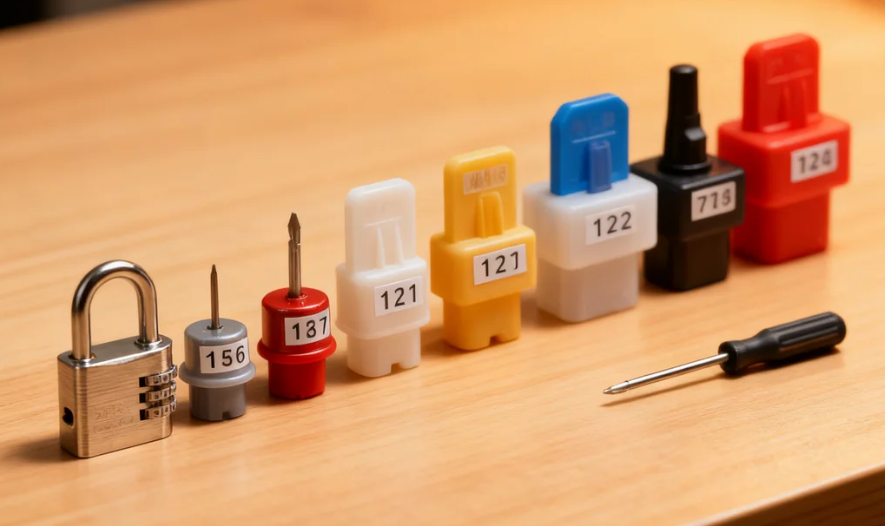
Stainless Steel: Stainless steel is the go - to material for high - security meter seals. It offers exceptional strength, corrosion resistance, and tamper - resistance. Stainless steel seals can withstand harsh environmental conditions, including extreme temperatures, humidity, and exposure to corrosive substances. Their high tensile strength makes them difficult to cut or break, providing a high level of security. These seals are often used in commercial and industrial applications, as well as in high - value utility meters where the risk of tampering is significant.
Brass: Brass is another metal commonly used for meter seals. It has good corrosion resistance, is relatively easy to machine, and can be engraved or marked for identification purposes. Brass seals are often used in applications where a combination of durability and aesthetic appeal is required. They are suitable for both indoor and outdoor use and can be found in some high - end residential and commercial meter installations.
Fiber - Reinforced Plastics (FRP): FRP materials, such as glass - fiber - reinforced plastic or carbon - fiber - reinforced plastic, combine the advantages of high - strength fibers and plastics. They offer excellent strength - to - weight ratios, corrosion resistance, and durability. FRP seals are highly resistant to tampering, as they are difficult to cut or break. They are often used in high - security applications, such as in critical infrastructure meters or in areas where environmental conditions are harsh.
Security Requirements: The level of security needed is a primary factor. For high - risk areas where meter tampering could lead to significant financial losses or safety issues, materials like stainless steel or FRP are preferred. In low - risk residential areas, less expensive plastics like PP may suffice.
Environmental Conditions: The environment in which the meter is installed matters. Seals exposed to moisture, chemicals, or extreme temperatures should be made of materials that can withstand these conditions. For example, stainless steel or corrosion - resistant plastics are ideal for outdoor or industrial environments.
Cost - Effectiveness: Budget constraints often influence material choice. While high - security materials like stainless steel offer top - notch protection, they can be costly. In some cases, a balance between security and cost may lead to the use of more affordable plastics or brass in less - critical applications.
Contact: Cherry Deng
Phone: +86 15305911267
Tel: +86 0591-83656592
Email: cherry@zcsecurityseals.com
Add: NO.136 FuGuang Road, distrito JinAn FuZhou, FuJian